
Not every drainage pipe needs to last for decades. On a construction site, or when laying cables and pipelines, an excavation or trench often only needs to stay dry for a few months. Once the work is done, the pipe disappears under sand or a foundation – and that is usually where it stays. For exactly these temporary applications, we at Alldrain are developing drainage that breaks down naturally once it has done its job. To better understand that process, we are currently running field trials together with the Dutch knowledge institute Deltares.
At a glance
- Biodegradable drainage: both the pipe and the cellulose filter
- Designed for temporary drainage on construction sites and infrastructure works
- Field trials with Deltares through the SME Challenge, since mid-2026
- Goal: understanding which soil life drives the breakdown
One pipe, many applications
Drainage is about more than removing water. Our pipes do a different job depending on where they are installed:
Agriculture
Managing the groundwater level: draining excess water in wet periods, retaining or infiltrating water during dry spells.
Trees & greenery
Bringing water and oxygen to the roots of trees and new plantings.
Construction & infra
Keeping excavations and cable trenches workable for as long as the works last.
That last group of applications has one thing in common: the pipe has a short-term task, but often simply stays in the ground afterwards. Using a conventional plastic pipe there means leaving behind plastic that no longer serves any purpose.
Biodegradable, from pipe to filter
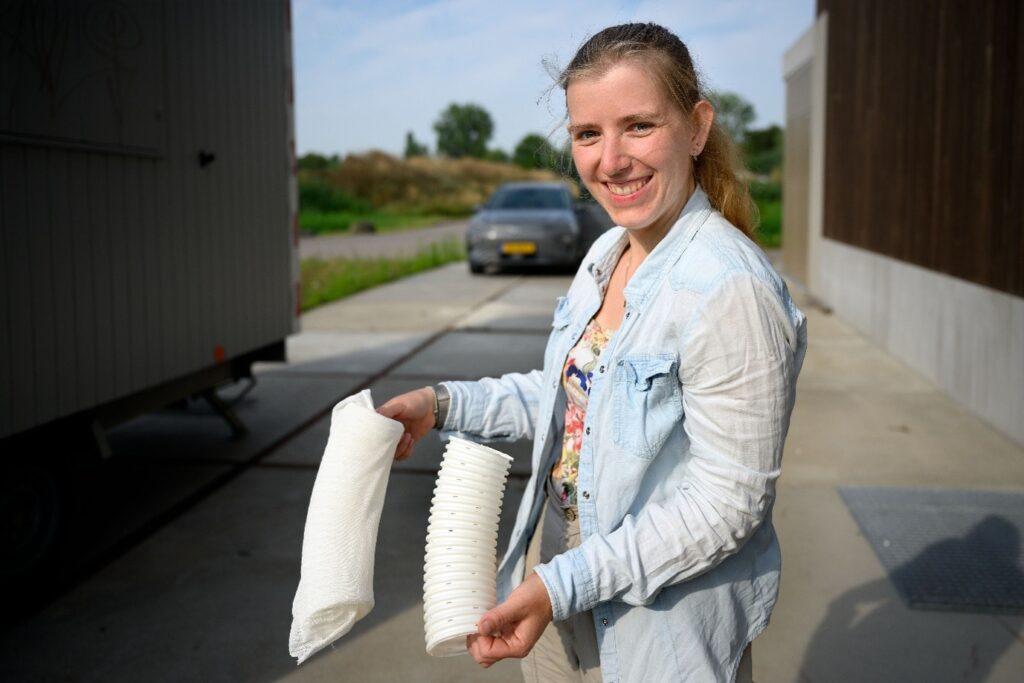
Our alternative is a biodegradable drainage system. We look not only at the pipe itself, but also at the wrapping around it. That filter layer holds back sand and silt particles, so the perforations don’t clog up. In our biodegradable version, we use cellulose, among other materials.
The art of good timing
Biodegradability only adds value if it happens at the right moment. If a pipe starts to degrade too early, the drainage fails while it is still needed. If it happens too slowly, the product misses its purpose. On top of that, the required lifespan varies greatly per application: an agricultural field often needs drainage for years, a temporary excavation sometimes only for a few months.
Agricultural field
Drainage often needed for years
Temporary excavation
Sometimes only a few months
That is why we want to know exactly what happens in the soil. Which microorganisms break down the material? And how do soil type and conditions affect the pace? Surprisingly little is known about degradation in soil – and that is precisely the knowledge we need to deploy our products in a targeted way.
Test pieces in different soils
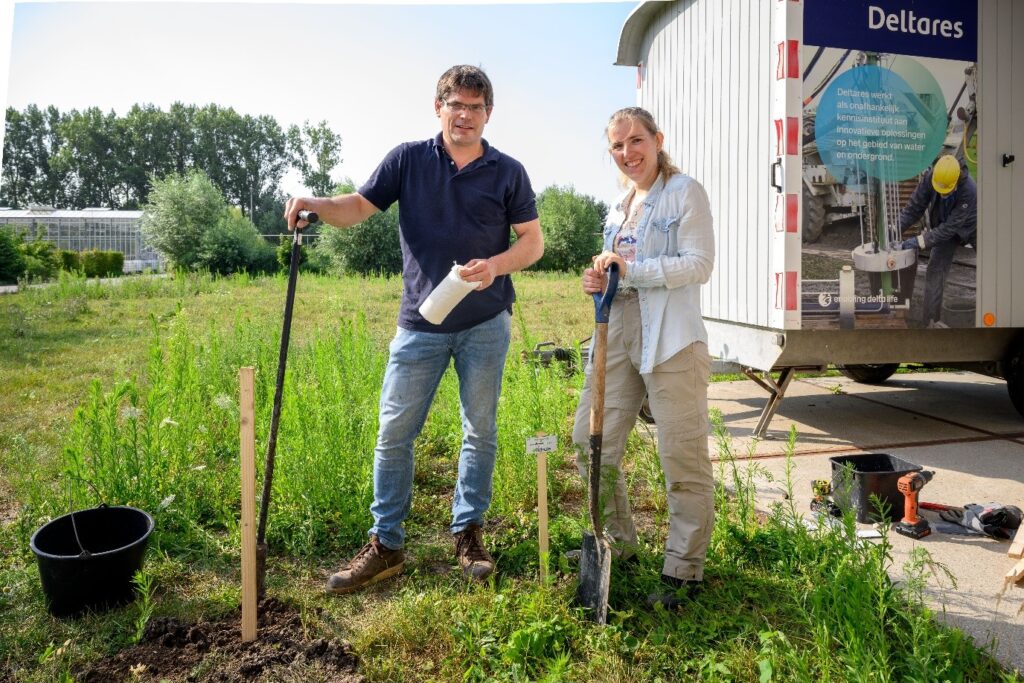
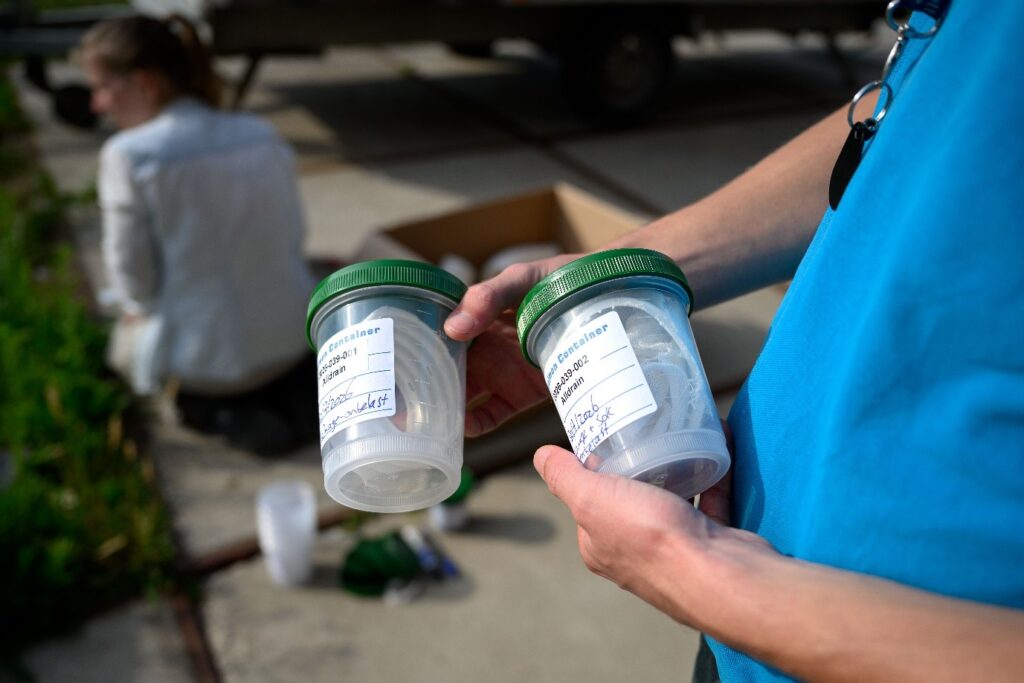
In mid-2026, we were selected for the Deltares SME Challenge. Through this programme, SMEs with an innovative idea gain access to the researchers and Deltares’ test facilities, including the DeltaLab. Test pieces of our drainage have since been buried on the Deltares site, as well as at other locations with a different soil type. By comparing these situations side by side, we are mapping the relationship between soil, soil life and degradation.
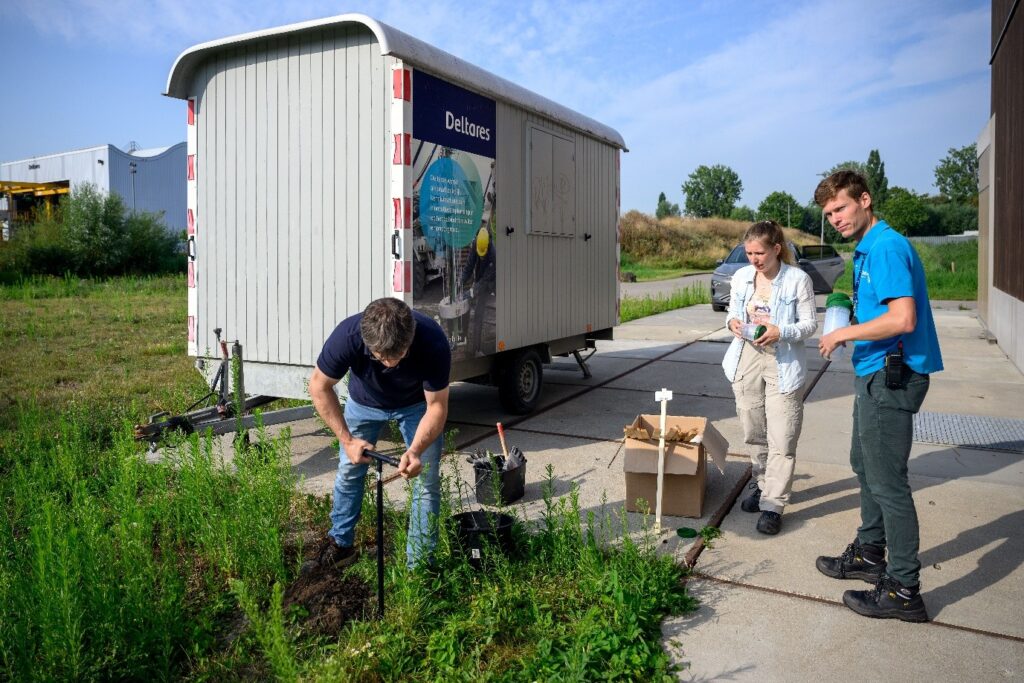
Kim Gommans, soil and groundwater researcher at Deltares, is helping to supervise the trials. For her, the question is not only whether the material breaks down, but just as much how to measure and monitor that process reliably.
And that is exactly where the challenge lies. Our pipes are made to last for some time, while the research period is limited.
The research questions
- Which measurements already give a reliable picture of what happens in the long term?
- What differences do we see between soils?
- What role does each type of microorganism play?
These questions are at the heart of the tests.
An opportunity we didn’t let slip
The collaboration came about faster than expected. During a visit to Deltares, we heard about the SME Challenge – just before registration closed. We still managed to submit a proposal, and shortly afterwards the first test pieces went into the ground.
It is a collaboration in which both parties bring something to the table: we contribute an innovative product and hands-on experience from agriculture, landscaping and construction; Deltares contributes scientific expertise and specialised testing infrastructure. For Deltares, too, the research yields new insights into how innovative materials behave in the soil.
What’s next?
The results will help us substantiate, per application, which drainage fits and how long it needs to last. They will undoubtedly raise new questions as well. One avenue that already fascinates us: once we know which processes drive degradation, could we deliberately speed it up as soon as a pipe has done its job – for example with specific microorganisms? That is still a long way off. First, we want to properly understand what is happening underground today.
Curious whether biodegradable drainage could work for your project?
Get in touch with our team – we’re happy to think along with you.