
How do biodegradable drainage pipes break down in soil?
A drainage pipe designed to work for years must not break down too soon. But what if a pipe is only needed for a few months, for example to keep a construction site dry? In that case, you want to avoid leaving unnecessary plastic in the soil afterwards. That is why Alldrain is developing biodegradable drainage solutions.
Alldrain tests a biodegradable alternative
Through the Deltares SME Challenge, Alldrain is investigating which microorganisms influence the breakdown of its biodegradable drainage material. The company can test its innovative concept at Deltares’ experimental research facilities, including the Delta-lab. The knowledge gained will help Alldrain further develop its drainage solutions and tailor their use more precisely to different applications.
Breaking down at the right time
Drainage pipes are used in many different settings. In agriculture, they help regulate groundwater levels. Whereas drainage was once mainly intended to remove excess water, pipes can now also be used to retain water during dry periods or allow it to infiltrate the soil. They can also provide irrigation and aeration around trees and other plants.
Another important application is on construction sites and during infrastructure works. Drainage keeps excavations and cable trenches dry while work is under way, for example. Once the work is complete, these pipes are not always removed from the soil.
This is precisely where Rob Kursten of Alldrain sees opportunities for a biodegradable alternative. “On a construction site, you sometimes only need a drainage pipe for a few months. Afterwards, it is covered with sand or a building, and the pipes are often simply left in place. For temporary applications like these, it is useful if a pipe can break down once it has reached the end of its functional life.”
Alldrain is therefore looking for ways to leave less plastic in the soil. The company is considering not only the pipe itself, but also the filter material surrounding it. This filter prevents sand particles from clogging the openings in the drainage pipe. For its biodegradable alternative, Alldrain uses materials including a cellulose filter.
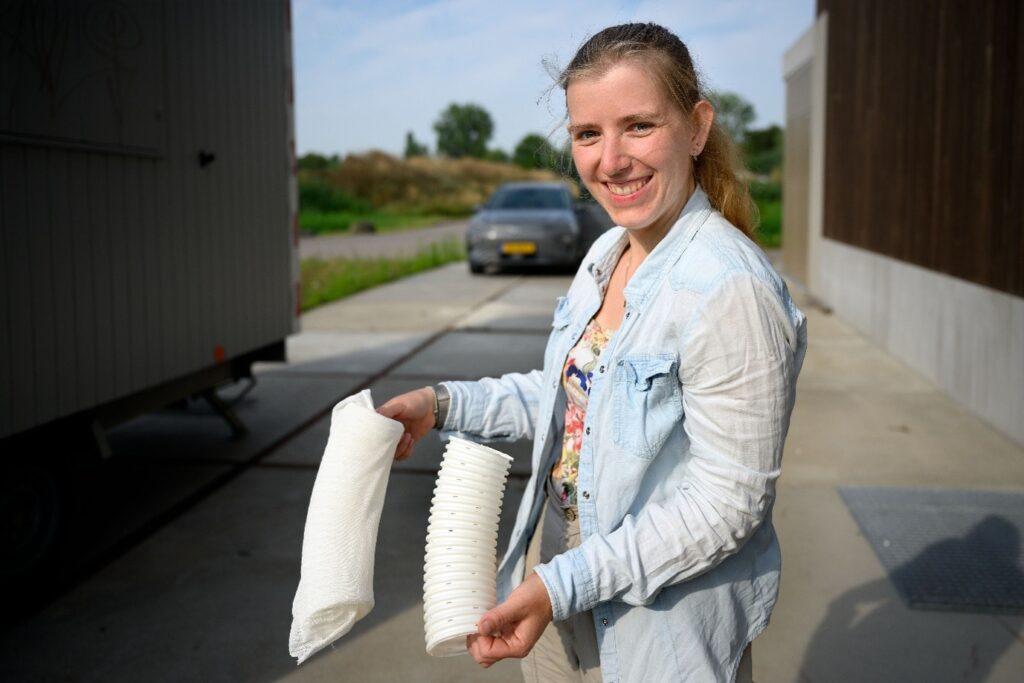
The challenge lies in the service life. The pipe must remain intact long enough to do its job properly, but then be able to break down. The required service life also varies by application. In agriculture, drainage may be needed for years, while a much shorter period is sufficient on a temporary construction site.
“There is still a lot to learn about biodegradation in soil,” says Rob. “Above all, we want to know which soil organisms actually influence the breakdown process. Taking part in the SME Challenge has given us access to the DeltaLab and the knowledge of experts. We hope these tests will significantly advance our understanding, so that we can ultimately use our products in a more targeted way.”
What happens underground?
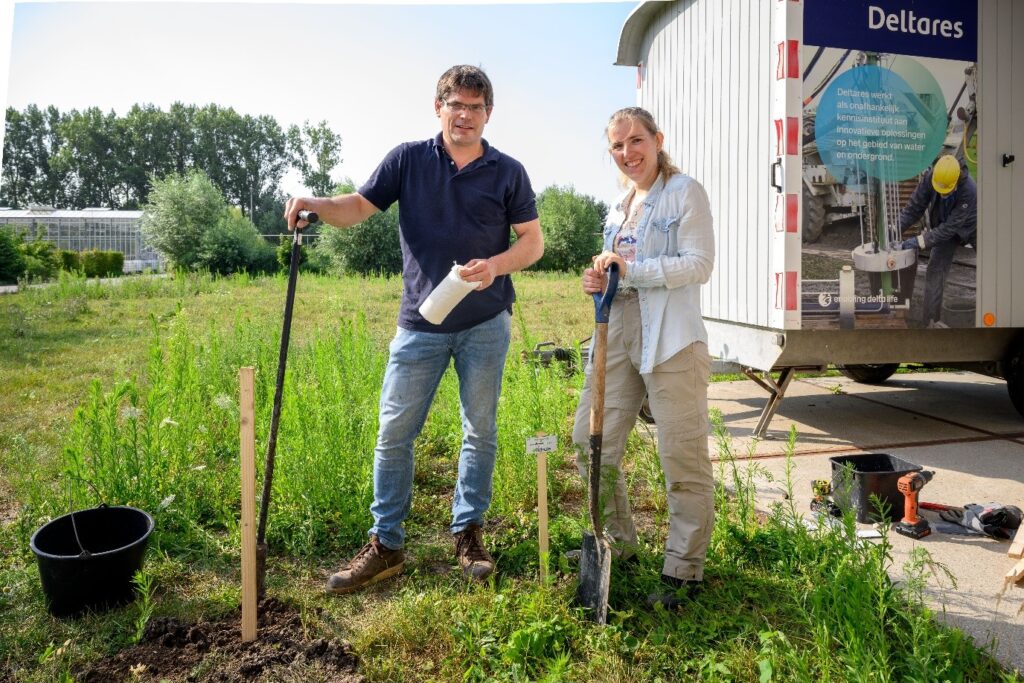
In mid-2026, Alldrain was selected for the Deltares SME Challenge. Test sections of the drainage solution have since been buried at the Deltares site. Sections have also been buried at other locations with different soil types. By comparing different conditions, Alldrain hopes to learn more about the relationship between soil, soil organisms and the breakdown of the material.
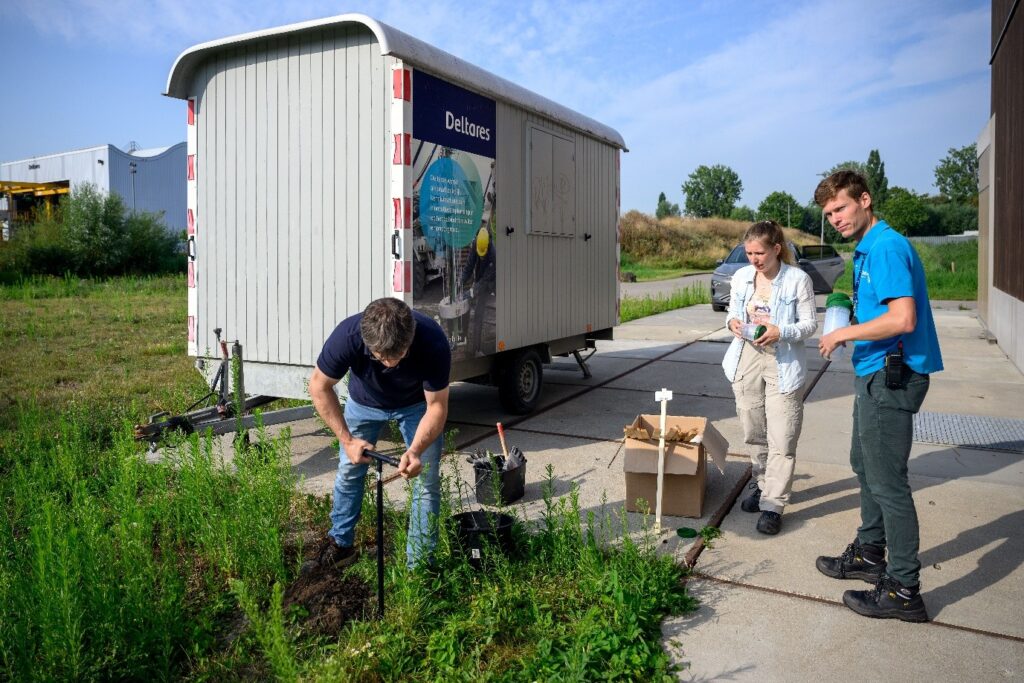
Kim Gommans, a soil and groundwater quality researcher at Deltares, is one of the researchers supporting Alldrain during the tests. The question is not simply whether the material breaks down. Equally important is how to measure and monitor that process reliably.
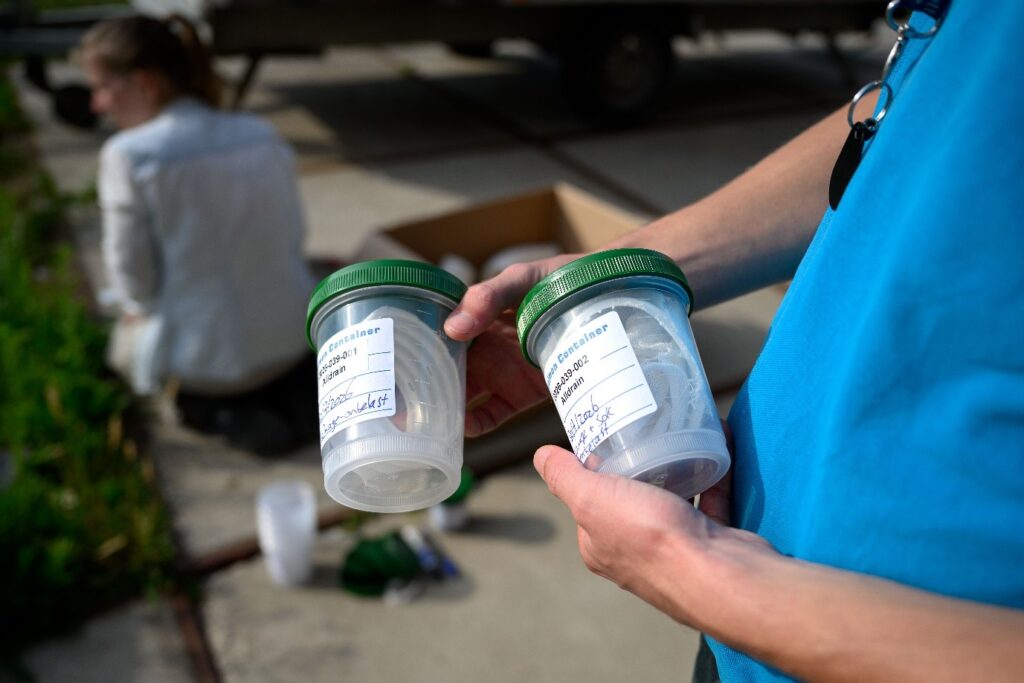
“With these trials, we want to better understand which conditions and microorganisms influence the breakdown process,” says Kim. “At the same time, we are investigating how to measure that process accurately. This knowledge can help Alldrain build a stronger evidence base for the use of its drainage solutions.”
This is no simple task. The pipes are designed to function for an extended period, while Alldrain wants to learn as much as possible within the research timeframe. What role do different microorganisms play, for example? What differences can be observed between soil conditions? And which measurements are needed to draw reliable conclusions over the longer term as well?
From research to application
A better understanding of the breakdown process could ultimately help Alldrain use its drainage solutions in a more targeted way. The initial tests may also raise new research questions. Rob is already looking further ahead. Once there is a clearer understanding of the processes that influence breakdown, he believes it would be interesting to investigate whether that breakdown could be deliberately accelerated once a drainage pipe has served its purpose.
“Suppose the pipe has reached the end of its functional life,” says Rob. “It would then be interesting to explore, at some point, whether you could deliberately speed up its breakdown, for example by using certain microorganisms. But first, we need to better understand exactly what happens in the soil.”
“This type of research gives Deltares new insights into how innovative materials behave in soil.” – Kim Gommans, soil and groundwater quality researcher at Deltares
Taking an innovative idea to the next stage
The collaboration with Deltares got under way quickly. During a visit to Deltares, Alldrain heard about the SME Challenge shortly before applications closed. The company decided to submit a proposal anyway. Not long afterwards, the first test sections were in the ground.
Alldrain’s experience provides a concrete example of what participation in the SME Challenge can achieve. The company brings an innovative product and practical knowledge. Deltares contributes researchers, specialist expertise and experimental facilities. Together, they can investigate questions that are important for taking the innovation further.
For Alldrain, this means taking the next step in developing biodegradable drainage: gaining a better understanding of what happens underground, so that the company can ultimately use its products in a more targeted way.