
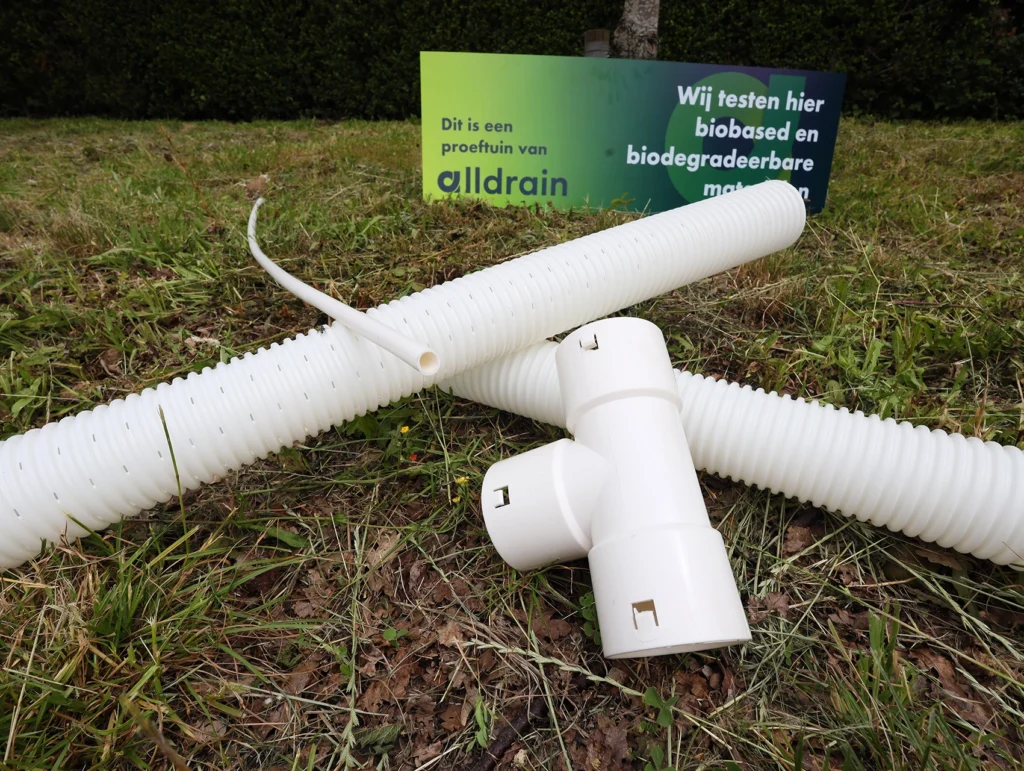
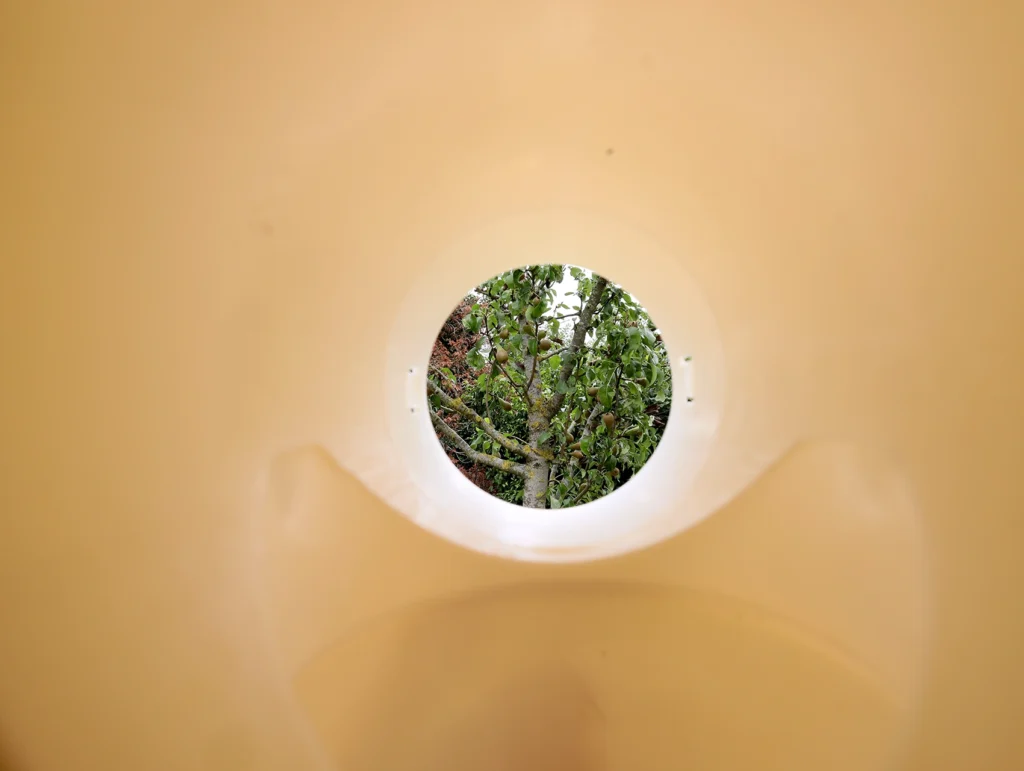
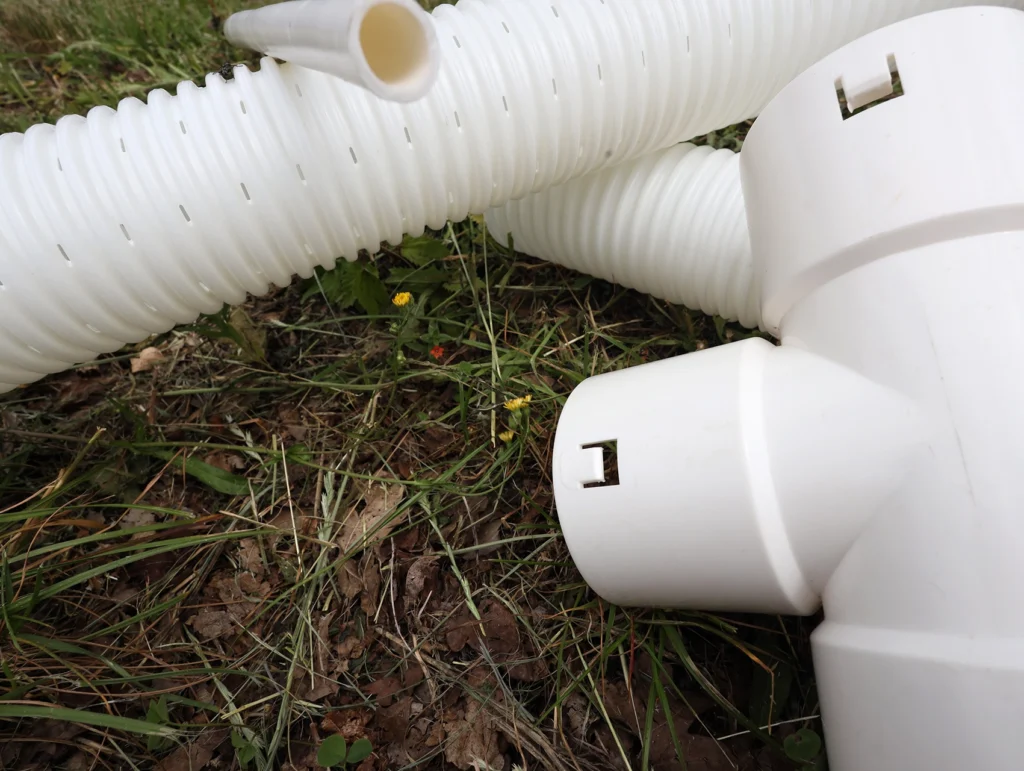
At Alldrain, we are aware of the impact pipes can have on the environment when they remain in the soil after use. That is why we developed a new type of pipe called Verdiflex: an innovative, bio-based and biodegradable pipe that breaks down into naturally occurring substances at the end of its functional life. In this way, we help reduce microplastics and soil pollution.
Meets the same quality standards as pipes made from fossil-based plastics.
Leaves no microplastics in the soil or groundwater. Biodegradable into naturally occurring substances.
Reduces the risk of costs associated with soil remediation.
Raw materials sourced from agricultural by-products.
Functional lifespan tailored to the application (from 5 to 15 years).
Positive impact on the CO₂ footprint, and a circular product thanks to the use of organic residual material.
We are continuously working towards a greener future and a better environment by investing in innovative techniques and strong partnerships in water management and soil quality.
What does this mean?
The bio-pipe is made from biopolymers, partly derived from agricultural by-products such as sugar beets and potatoes. Its specific polymer composition results in a pipe that lasts a long time (>5 or >15 years) but then breaks down completely in the soil.
Biodegradable means that a material can be broken down by natural processes, such as bacteria, fungi or other micro-organisms, into harmless basic substances like water, carbon dioxide and biomass. However, the term does not specify how long this process takes or what conditions are required. Current certification standards only cover a period of up to 24 months. The term non-persistent is used for materials that only break down into naturally occurring substances after their functional lifespan (>5 or >15 years).
The bio-pipe is used in several fields: Agriculture, Tree Aeration, and Construction & Infrastructure.
For applications of a temporary nature, a non-persistent pipe is the logical choice. These pipes can simply be left in place and will eventually break down completely in the soil without leaving any harmful substances behind.
This depends on the biopolymers we use as raw material. Two lifespans are currently available: 3 to 5 years, and up to 15 years. Several factors affect the lifespan, such as soil type, temperature, moisture and the level of organic matter in the soil.
At the end of its lifespan, the bio-pipe breaks down into naturally occurring substances. No harmful residues are left behind. The bio-pipe is also free of toxic substances and heavy metals.
Yes. The raw materials used to produce the biopolymers are partly renewable by-products from the agricultural sector.
No, there is no need to adapt installation methods or the tools and machines used.
No. All products are safe and environmentally friendly.
Yes. The biopolymer composition used is eventually broken down by micro-organisms in the soil.
The bio-pipes are tested according to KOMO guidelines and meet the same mechanical requirements as fossil-based pipes. They are proven to be non-persistent.
Do you have questions about these products or their applications, or do you need specific advice? Please contact: